Languages


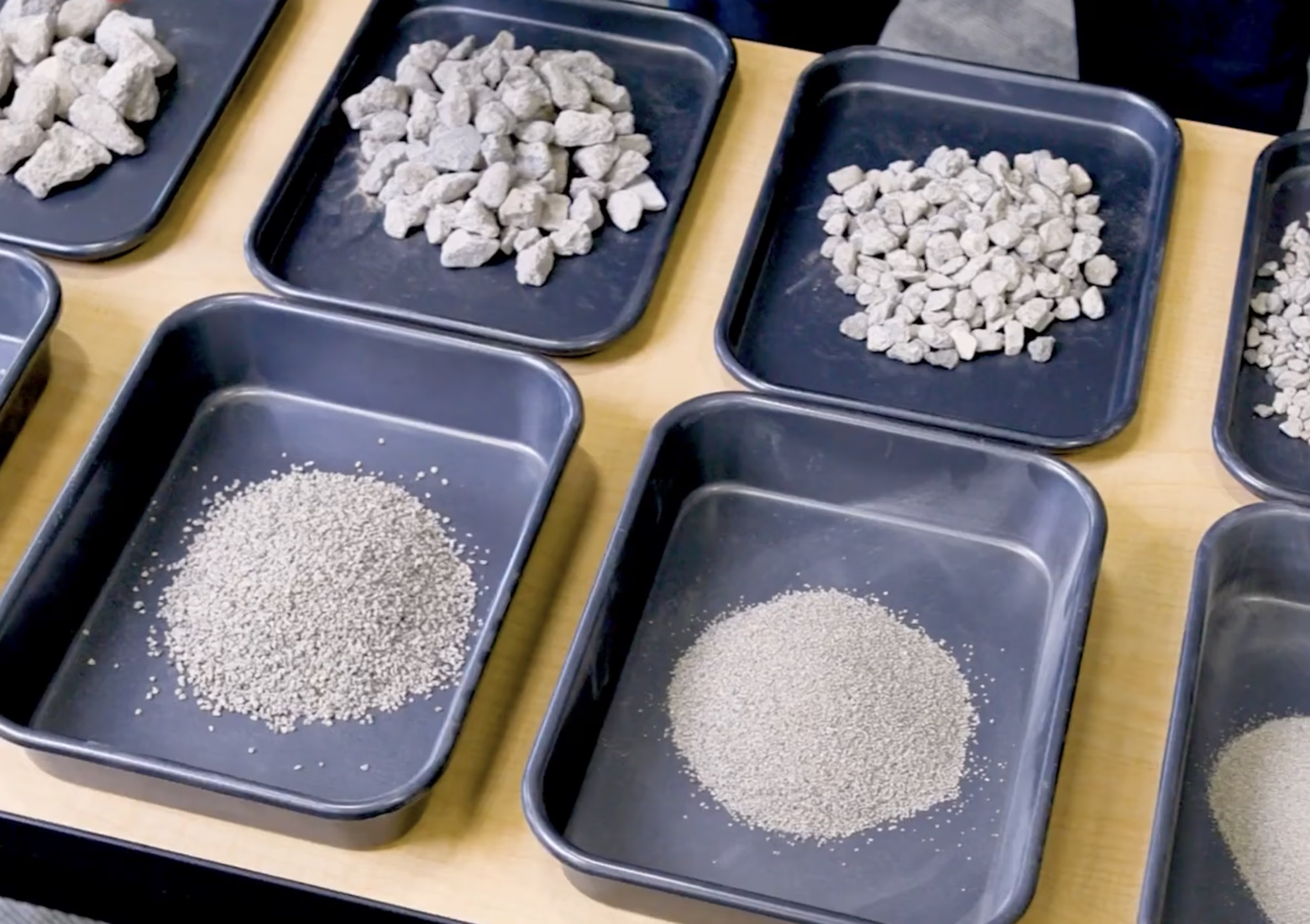
Choosing the right subbase material is an important part of building a stable foundation for roads, parking lots, pavement, and other construction projects. Special Backfill, Modified Subbase, and Granular Subbase can look very similar, but differences in particle size and gradation affect how each material compacts and drains. For contractors, understanding those differences is especially important when reviewing project specifications, bidding a job, or ordering aggregate.
Watch our video for a closer look at the different types of subbase material used here in Iowa.
Subbase material is aggregate placed beneath pavement or other finished surfaces to create a stable, compacted foundation. It helps support the pavement above it while providing the characteristics needed for the specific project.
One of the biggest factors that separates different types of subbase is the gradation, or the distribution of particles by size within the material. That particle distribution is important when an engineer is outlining project specifications, as it can affect things like compaction and drainage.
Special Backfill offers the most flexibility when it comes to particle distribution. Compared with Modified and Granular Subbase, its specifications allow more variation in the amount of finer material within the mix while still providing a compactable aggregate base.
Modified Subbase is similar to Special Backfill but contains more coarse aggregate. With more space between the larger particles, water can move through the material more easily, giving it better drainage characteristics while still providing a stable base.
Granular Subbase contains more coarse aggregate and fewer fine particles than Modified Subbase. That makes it a good fit for applications where drainage is especially important and less fine material is needed within the mix.
The biggest difference between Special Backfill, Modified Subbase, and Granular Subbase comes down to gradation and drainage. Special Backfill allows the most flexibility, Modified Subbase includes more coarse aggregate, and Granular Subbase requires even more coarse material and fewer fines.
The specifications are similar enough that the same material may sometimes meet more than one classification. That's why contractors should always refer to the engineer's project specifications rather than choosing a subbase material based on the product name alone.
Whether you're bidding a project or getting ready to start construction, knowing which subbase material is required can help you order the right product from the beginning.
CTI Recycling supplies recycled aggregate and subbase materials for construction projects throughout Central Iowa. If you have questions about Special Backfill, Modified Subbase, Granular Subbase, or which material meets your project's specifications, give us a call at (515) 721-0019.
.svg)


